
Podcast
“Sovereignty Means Being Able to Change Course” – A Conversation with Manfred Beckers
Digital sovereignty in finance: Manfred Beckers discusses cloud dependencies, DORA, exit strategies and maintaining the ability to adapt.
Compliance


11.01.2022|

The increase in criminal activity – partly fuelled by the Covid pandemic – is piling the pressure on compliance departments and regulators alike. For example, the volume of suspicious activity reports related to Germany’s Money Laundering Act increased more than twelvefold between 2010 and 2020. The sharp 25% increase in 2020 is also a result of news related to COVID-19 and cryptocurrencies. Other sectors such as notaries also now have to comply in this respect and are required to report transactions linked to money laundering. The FIU in Germany forecasts that the number of SARs will be higher still in 2021.
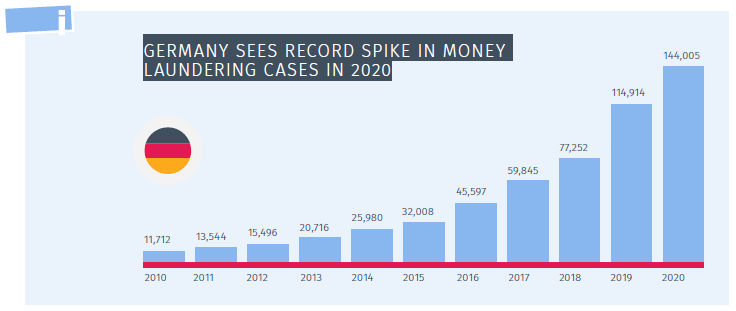
The situation is similar in other countries: in 2020, the Money Laundering Reporting Office Switzerland (MROS) received more SARs than ever before. The SFIU in Liechtenstein also says volumes are soaring, while the FIU in the Netherlands recorded a 163% increase in the number of suspicious transactions in 2020. It expects the numbers to keep growing, which is why it joined forces with IT specialists and data scientists to set up a DevOps team in 2020.
The financial sector has been flooded with new legislation over the last few years. Key regulations for compliance departments include the EU Money Laundering Directive, the Market Abuse Directive (MAD) and MaRisk compliance. 2020 saw an additional raft of legislation being introduced in Germany, including anti-money laundering regulations based on the all-crimes approach, BaFin’s AUA guidelines relating to the Money Laundering Act, and the European Transparency Register and Financial Information Act (TraFinG). Switzerland has also amended certain legislation, and the revised Money Laundering Act will come into force in 2022. In 2024, the EU’s new Anti-Money Laundering Authority (AMLA) is set to begin work on creating a single integrated system to combat money laundering and terrorist financing. All of this means more work for banks and insurers.
This has all increased the pressure on compliance teams in their fight against money laundering – exacerbated still further by the shortage of skilled staff and rising costs. Banks and insurance companies have already invested massively in compliance, but conventional methods are simply inadequate to tackle the increasingly complex work involved and the growing flood of data. Yet if internal control mechanisms fail to do their job, banks risk incurring massive fines that can run to millions. Banks all around the globe were hard hit by this.
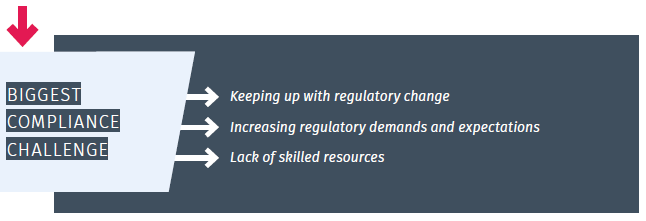
Staff shortages in compliance departments and rising costs are ramping up the pressure on banks and insurers. One step they can take is to reduce false positives, also known as false alarms. Rule-based IT systems generate these reports, which are technically accurate but on closer inspection clearly do not represent a money laundering risk. They place an unnecessary burden on compliance staff because every false positive has to be clarified. Many financial institutions have already tackled this issue and achieved real improvements thanks to machine learning.
Machine learning – a component of artificial intelligence – analyzes potential money laundering cases based on data knowledge. Supplemented by the knowledge and experience of compliance staff in the specific area, it is possible to identify anomalies with greater speed and efficiency. As a result, huge data volumes can be analyzed more efficiently, suspicious patterns detected more easily, and potential risks identified at an early stage. This is also the conclusion of a recent study by the FATF (Financial Action Task Force on Money Laundering), a leading international body in the fight against money laundering. By using automation and machine learning, compliance departments can reduce the amount of work involved in complex analysis and review, increase efficiency, and cut costs.
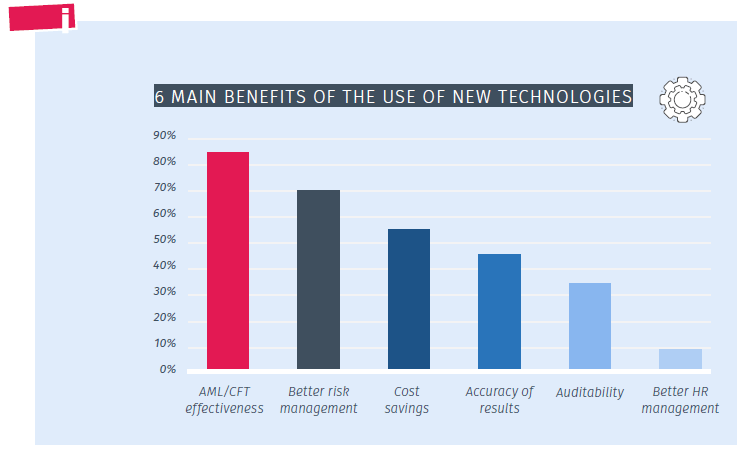
Source: FATF: Opportunities and challenges of new technologies for AML/CFT
In practice, banks are shrinking their workload by 50%, for example in payment screening. Another example is PEP and sanctions list screening. Once again, machine learning is helping to reduce hit rates by up to 60%, allowing compliance teams to focus on true positives and allocate their time accordingly.
How many financial transactions can you monitor and clarify daily? Learn how modern software helps banks, insurers and financial services providers ensure AML compliance.
You may also be interested in:
Podcast
“Sovereignty Means Being Able to Change Course” – A Conversation with Manfred Beckers
Digital sovereignty in finance: Manfred Beckers discusses cloud dependencies, DORA, exit strategies and maintaining the ability to adapt.
Compliance

News
Chartis Research Again Names ACTICO a Category Leader for AML Transaction Monitoring 2026
ACTICO has again been named a Category Leader in the Chartis RiskTech Quadrant® for AML Transaction Monitoring Solutions 2026. The assessment recognizes ACTICO’s strengths in risk typology modeling, analytical modeling, model validation, workflow automation, and AI-powered compliance.
Anti-Money Laundering
Financial Institutions/FinTech, Insurance
Awards & Recognitions
News
ACTICO announces it has joined forces with Axe Finance, a global provider of credit and risk management software
ACTICO announces that it has joined forces with Axe Finance, a UK-based provider of credit and risk management software. The deal is supported by Keensight Capital, one of the leading private equity managers dedicated to pan-European Growth Buyout investments.

Webinar
Update on AML Requirements for Insurers: what you need to do now to be ready by July 2027.
AML update for insurers: What needs to be done by July 2027 regarding KYC, risk assessment and transaction monitoring? Including practical insights. Watch the webinar.
Anti-Money Laundering
Insurance
Newsletter
Regular News and Updates
Decision Management Platform
Compliance
Resources
You are currently viewing a placeholder content from Hubspot Embedded Content. To access the actual content, click the button below. Please note that doing so will share data with third-party providers.
More InformationYou are currently viewing a placeholder content from HubSpot. To access the actual content, click the button below. Please note that doing so will share data with third-party providers.
More InformationYou are currently viewing a placeholder content from Hubspot Meetings. To access the actual content, click the button below. Please note that doing so will share data with third-party providers.
More InformationYou are currently viewing a placeholder content from Wistia. To access the actual content, click the button below. Please note that doing so will share data with third-party providers.
More Information