
Podcast
“Sovereignty Means Being Able to Change Course” – A Conversation with Manfred Beckers
Digital sovereignty in finance: Manfred Beckers discusses cloud dependencies, DORA, exit strategies and maintaining the ability to adapt.
Compliance


11.04.2024|

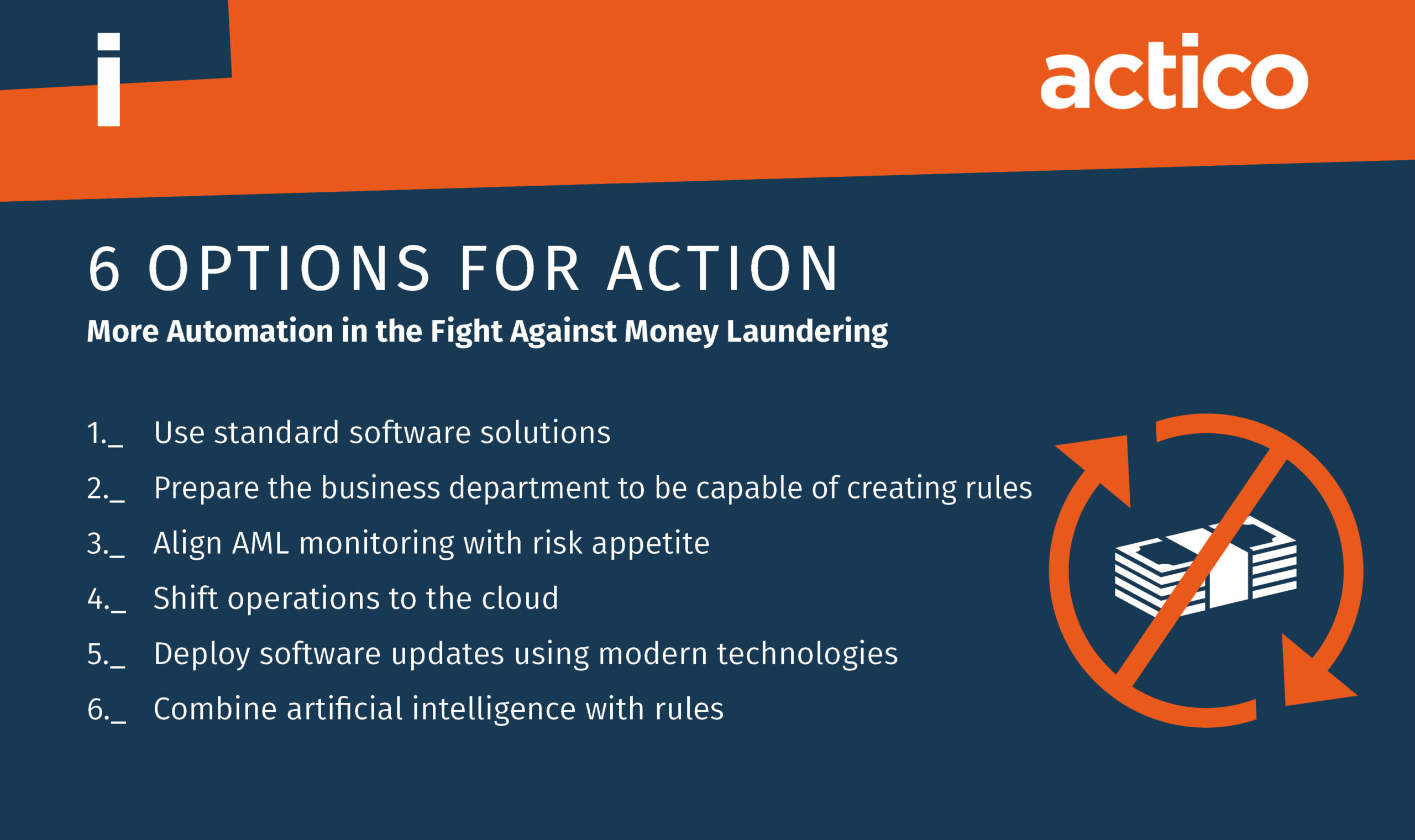
Banks and financial service providers are striving to leverage automation and boost security while keeping things affordable. In many cases, they even opt to do away with existing structures and restart things from scratch. This process depends on careful planning. It is significantly more successful than adapting the existing AML landscape. Six strategies for Anti-Money Laundering automation can help.
Banks and financial service providers, as gatekeepers to the financial system, battle unceasingly against money laundering.
Action is needed, as underlined by the increasing number of cases in which the regulator has found deficiencies in money laundering prevention. In response, many traditional banks and fintechs have been subject to special audits or had restrictions on acquiring new customers imposed.
Not only are these measures costly, but the media attention also that goes with them can easily damage reputations. No wonder more and more financial institutions are pondering how best to improve their AML monitoring systems. As data volumes multiply and demand for solutions surges, the number of compliance professionals remains limited. Given that fact and technology evolving ever more swiftly, reviewing processes and systems makes perfect sense.
Existing AML software often fails to keep pace with new technologies, whatever their operational approach, deploying solutions on-premises or in the cloud. Opting for the latter, however, is expected to help accelerate the roll-out of updates and ease the burden on internal IT teams.
When it comes to in-house compliance systems, a lack of cohesion is a key issue for many banks. Different applications run distinct applications that handle various tasks, such as monitoring securities trading, screening customer data with sanctions lists, and detecting money laundering. But Hamburg Commercial Bank has reinvented what were siloed solutions.
User-friendliness plays a key role when streamlining the work of anti-money laundering officers. Dashboards and responsive applications on desktops, tablets and smartphones help them handle their tasks more flexibly and make the workplace more appealing in the process.
So, what can the financial industry do to introduce automation on a wider scale?
Read on as we summarise six possible approaches:
Customer segmentation is one area where AI can make a real difference. It helps sort customers into clusters based on their data, with crucial factors including individual risk profiles and transaction behaviour. Machine Learning models analyse behavioural patterns or transaction characteristics, which allows more granular rule settings. ML also detects changes in transaction behaviour and automatically adjusts the risk class accordingly.
Banks and insurers also expect ML to reduce false positives. In a proof of concept (PoC), a retail bank supplemented its AML rule system with Machine Learning, trained around 12,000 datasets and reduced the number of false positives generated by more than 40%.
Machine Learning models learn from historical data and known cases of money laundering. The AI is trained based on a bank of AML decisions. The software employs a rule-based decision-making algorithm to that dictates which cases equate to money laundering and the process is then manually followed up by anti-money laundering officers.
The prerequisite for machine learning is having sufficient data available to train the system in recognising patterns and anomalies. And here, the more available data there is, the smarter the AI works, with models trained and learning on an ongoing basis. To further refine the AI model and ensure the detection rate keeps improving, it’s crucial to provide the ML models with the very latest data, including the results of further manual checks by anti-money laundering officers.

How many financial transactions can you monitor and clarify daily? Learn how modern software helps banks, insurers and financial services providers ensure AML compliance.
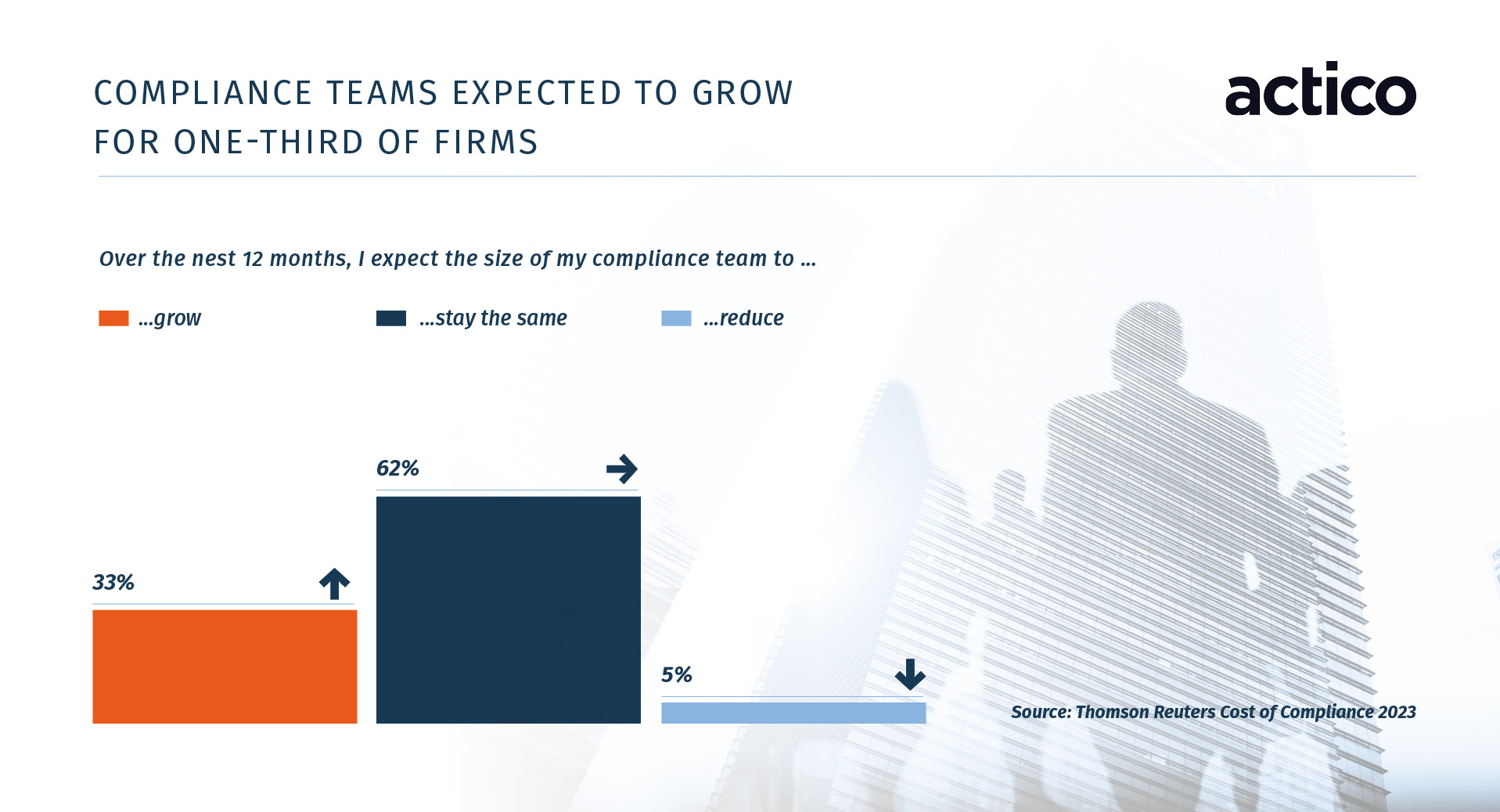
One factor in the growing demand for advanced AML software is cost. Many banks have hired and plan to hire more staff in the future. According to a Thomson Reuters study, ‘The cost of compliance 2023’, 33% of respondents expect to hire more compliance staff.
Given the lack and cost of specialised personnel, it makes sense to limit the use of these valuable resources for cases that cannot be solved automatically, rather than routine work.
The EU is laser-focused on the need to combat money laundering, which is why it has established a new Anti-Money Laundering Authority (AMLA). A new first from 2025 will see an EU authority play a leading role in supervising anti-money laundering.
And Switzerland is not standing still either, with the government keen to consolidate anti money laundering rules and make lawyers more accountable, among other things. The Federal Council will submit the bill to Parliament in 2024, with implementation expected from 2026.
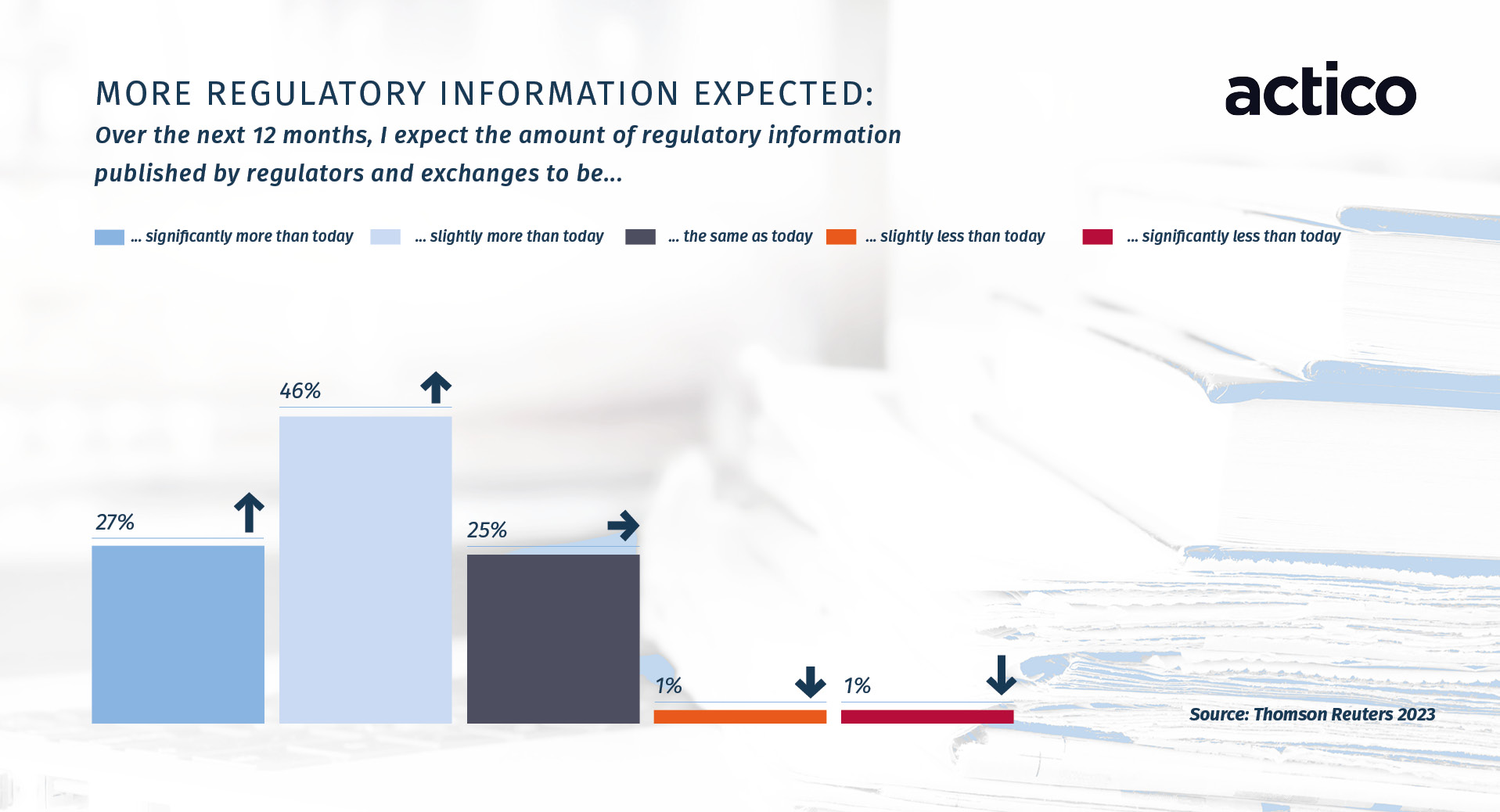
New regulations are having a major impact on banks and financial service providers by forcing them to adapt to new rules and change processes. This is confirmed by the analysis of the Cost of Compliance 2023 study by Thomson Reuters. Almost three quarters of respondents expect regulatory requirements to increase. 46% foresee a slight increase, while 27% expect a significant increase.
One key variable this depends on is how user-friendly the application itself is. Modern AML software solutions should offer intuitive interfaces that make it swift and simple for AML experts to access all necessary information. Other musts include dashboards, plus search and filter functions to facilitate the analysis of suspicious activities. All this streamlines usability for the experts and lets them analyse more hits or anomalies in less time.
When selecting a modern AML software solution, the decision facing banks and financial service providers is whether to go for an on-premises or cloud-based solution. Both have advantages and downsides. The former offers greater control and security, as the data is stored locally. Cloudified solutions, conversely, provide greater flexibility and scalability, so that banks can respond more swiftly and easily to changes. Because software vendors know their AML software well, a managed service in the cloud is usually easier for customers. They do not have to familiarize themselves with the software and its operation as intensively as with on-prem, making them faster and more effective. The choice between the two depends on the individual requirements and preferences of the bank.
The increasing demand for modern AML software points to the growing awareness among banks and financial institutions of the need for better protection against money laundering. And, in turn, this is often only possible when old habits are eliminated.
The advantages of modern AML software solutions include more effective detection and analysis of suspicious activities, along with a wide array of new features, improved usability, and technological advancements. Leveraging AI and appropriate matching algorithms can assist banks in mitigating the increasing risk of money laundering and fortify their position for the future.
You may also be interested in:
Podcast
“Sovereignty Means Being Able to Change Course” – A Conversation with Manfred Beckers
Digital sovereignty in finance: Manfred Beckers discusses cloud dependencies, DORA, exit strategies and maintaining the ability to adapt.
Compliance

News
Chartis Research Again Names ACTICO a Category Leader for AML Transaction Monitoring 2026
ACTICO has again been named a Category Leader in the Chartis RiskTech Quadrant® for AML Transaction Monitoring Solutions 2026. The assessment recognizes ACTICO’s strengths in risk typology modeling, analytical modeling, model validation, workflow automation, and AI-powered compliance.
Anti-Money Laundering
Financial Institutions/FinTech, Insurance
Awards & Recognitions
News
ACTICO announces it has joined forces with Axe Finance, a global provider of credit and risk management software
ACTICO announces that it has joined forces with Axe Finance, a UK-based provider of credit and risk management software. The deal is supported by Keensight Capital, one of the leading private equity managers dedicated to pan-European Growth Buyout investments.

Webinar
Update on AML Requirements for Insurers: what you need to do now to be ready by July 2027.
AML update for insurers: What needs to be done by July 2027 regarding KYC, risk assessment and transaction monitoring? Including practical insights. Watch the webinar.
Anti-Money Laundering
Insurance
Newsletter
Regular News and Updates
Decision Management Platform
Compliance
Resources
You are currently viewing a placeholder content from Hubspot Embedded Content. To access the actual content, click the button below. Please note that doing so will share data with third-party providers.
More InformationYou are currently viewing a placeholder content from HubSpot. To access the actual content, click the button below. Please note that doing so will share data with third-party providers.
More InformationYou are currently viewing a placeholder content from Hubspot Meetings. To access the actual content, click the button below. Please note that doing so will share data with third-party providers.
More InformationYou are currently viewing a placeholder content from Wistia. To access the actual content, click the button below. Please note that doing so will share data with third-party providers.
More Information