






Podcast
“Sovereignty Means Being Able to Change Course” – A Conversation with Manfred Beckers
Digital sovereignty in finance: Manfred Beckers discusses cloud dependencies, DORA, exit strategies and maintaining the ability to adapt.
Compliance


ACTICO brings agentic AI across the credit risk lifecycle – from automated financial spreading and analysis to credit memo creation, risk assessment and decisioning.
Book a Demo Explore the ACTICO Credit Risk Platform
Credit risk assessment requires analysts to synthesize data from multiple sources, including financial statements, market data, internal policies, and historical customer information.
Manual and time-consuming steps include:
Traditional automation addresses individual steps but cannot manage complete workflows.
Agentic AI transforms this by enabling goal-driven workflows where agents plan tasks, gather information, and execute structured analysis across multiple systems.
In credit risk workflows, AI agents function as operational partners for analysts. They automate repetitive tasks and prepare structured analysis, allowing experts to concentrate on risk evaluation and decision-making.

Typical workflow with Agentic AI:
This collaboration significantly reduces manual work while maintaining full human oversight.
Agentic AI enables financial institutions to automate numerous credit risk tasks:
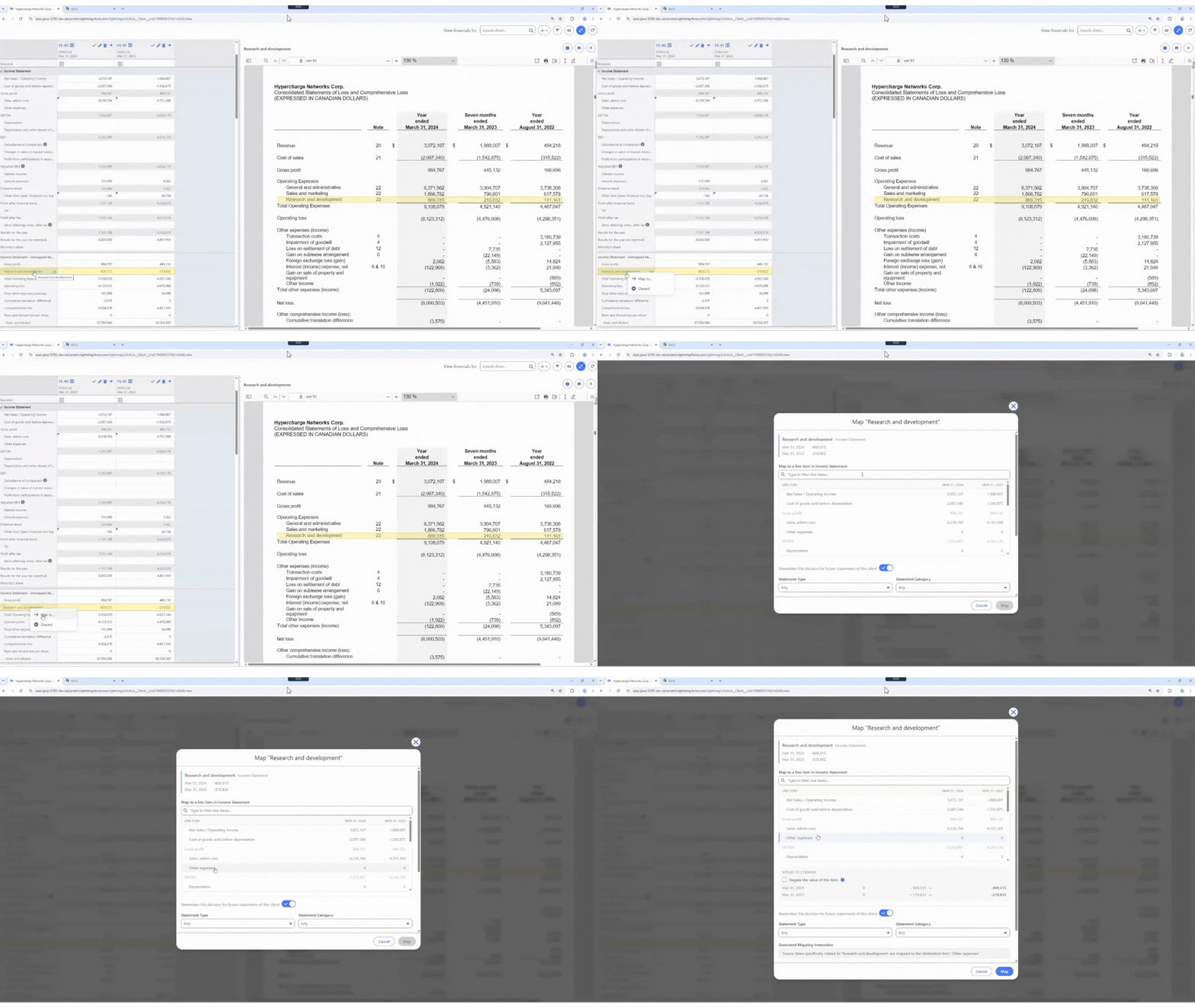
Automatically extract, interpret, and spread financial statement data with AI.
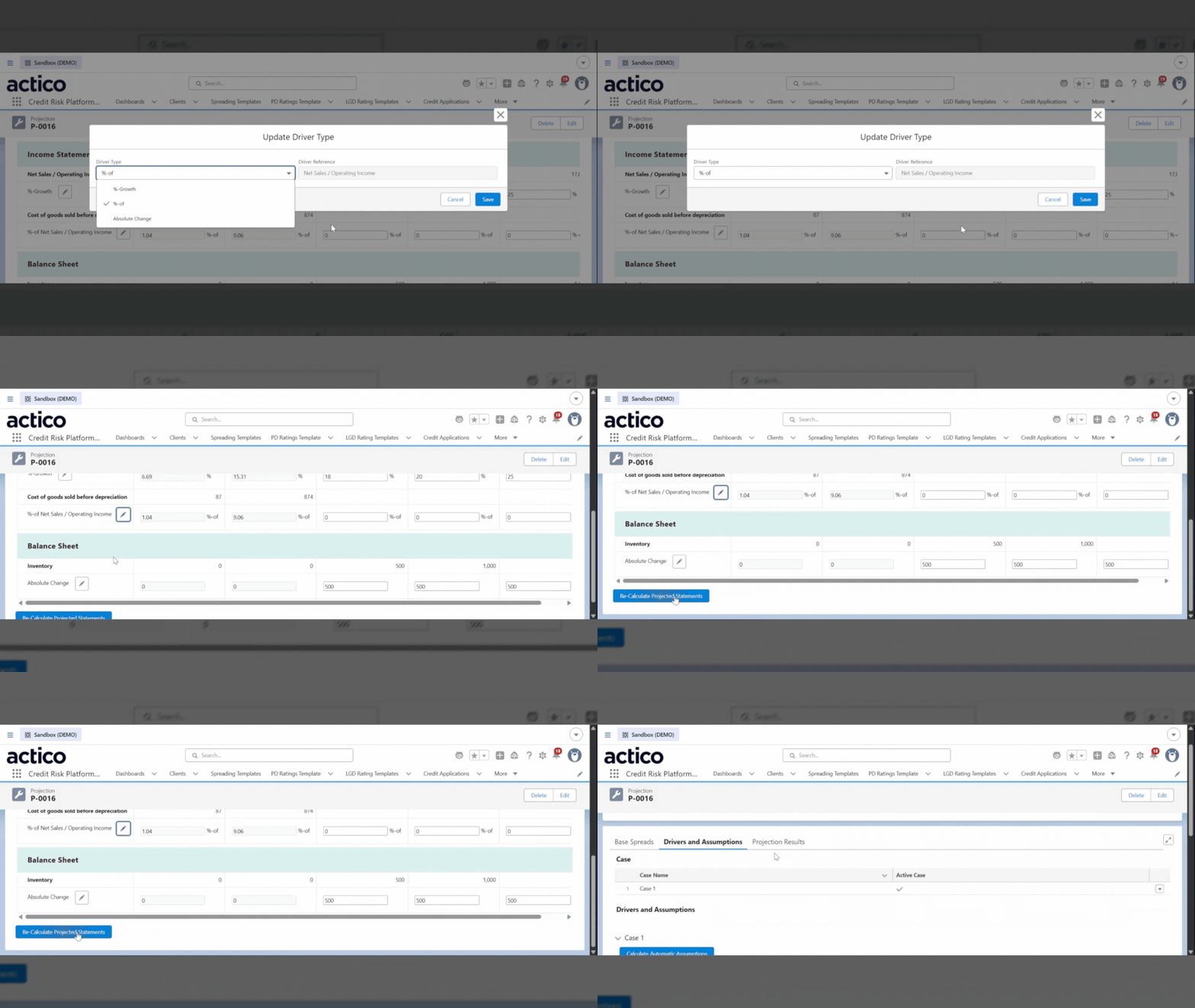
Turn spread financial data into meaningful insights for credit analysis and decision-making.
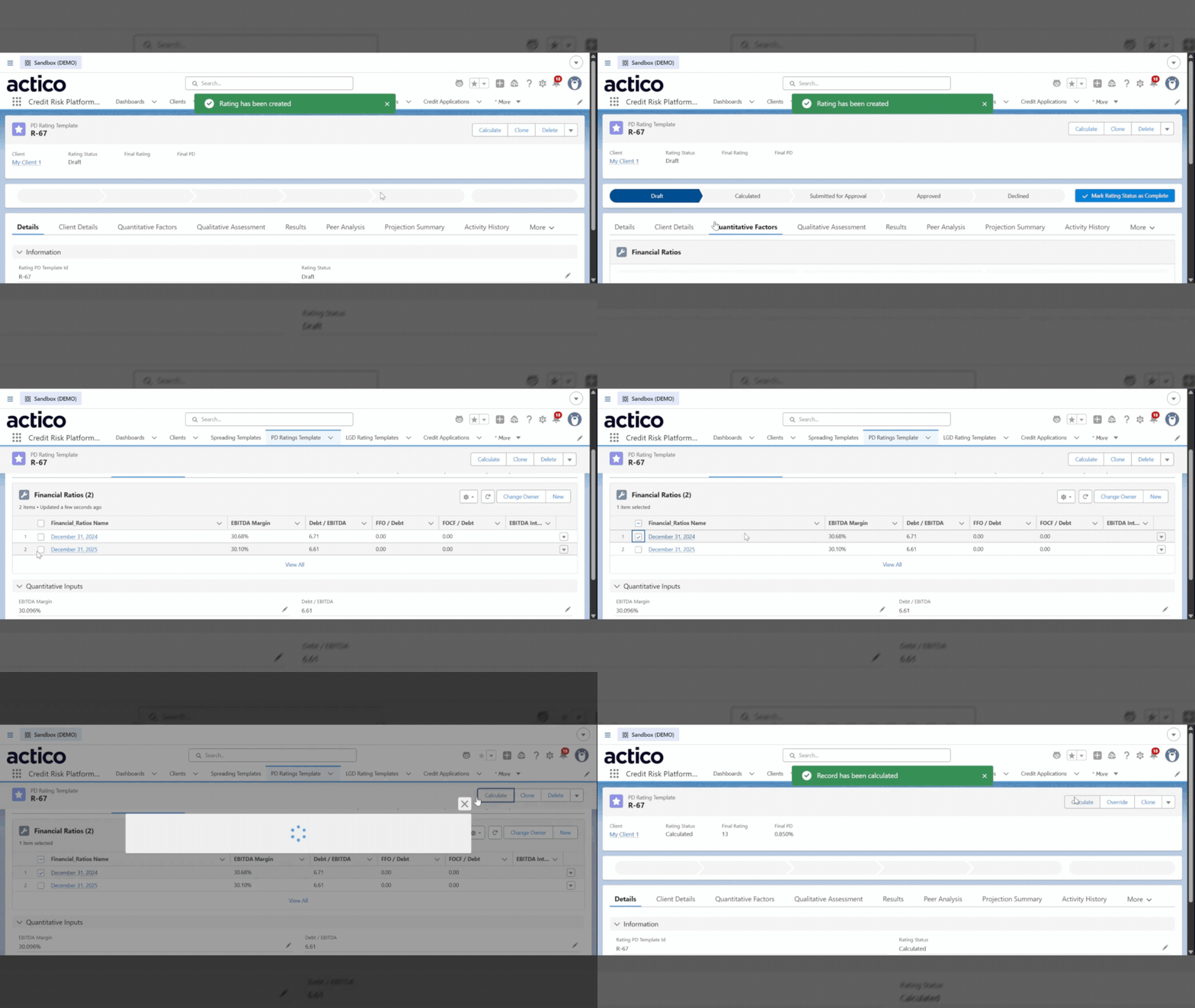
Use financial statement data as an input to risk rating and credit decisioning.
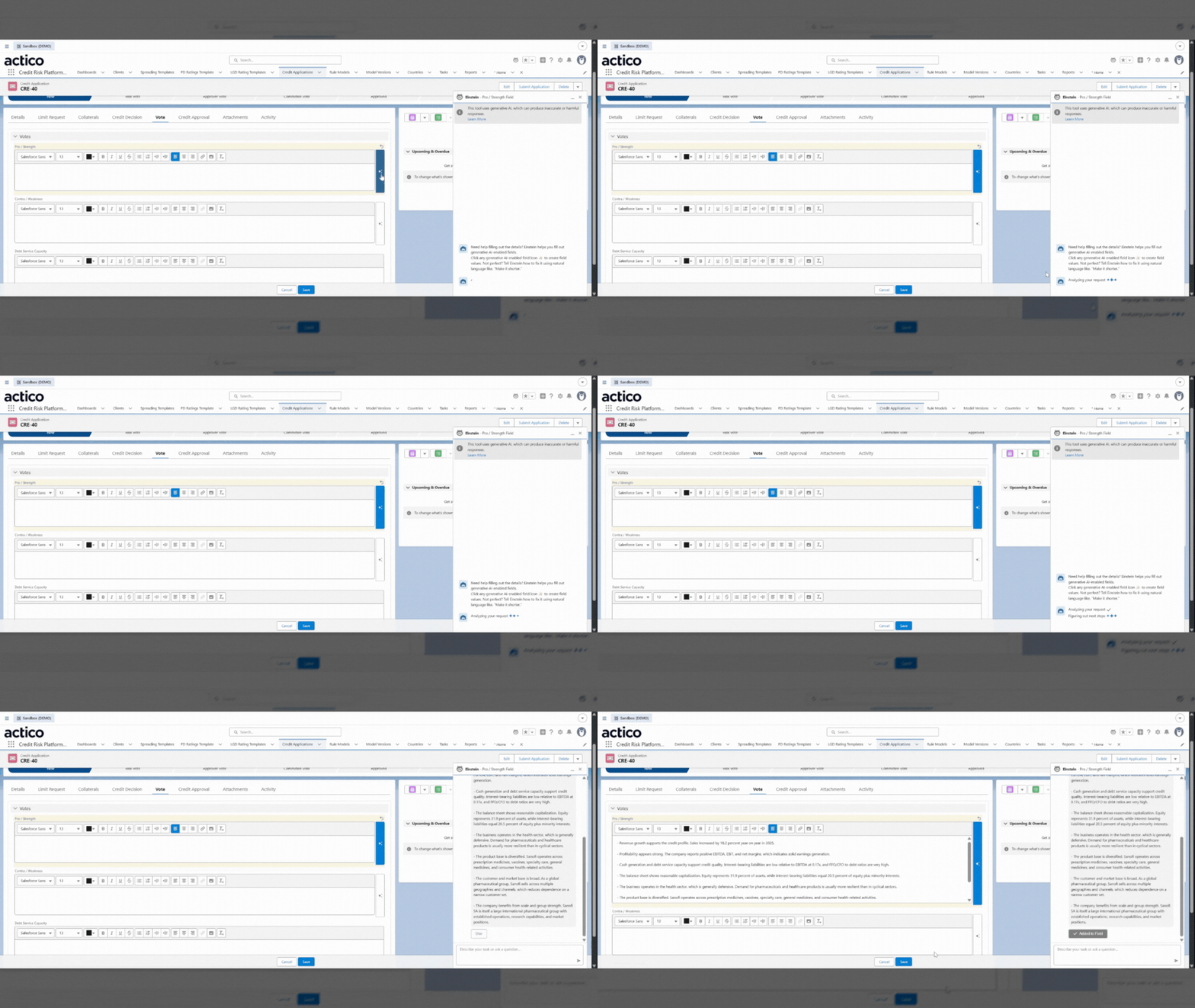
Credit Agents orchestrate data and analysis across the credit workflow, generating structured, audit-ready credit memos based on your company’s guidelines. Generate structured credit memos based on any data available (e.g. client master data, financials, ratings).
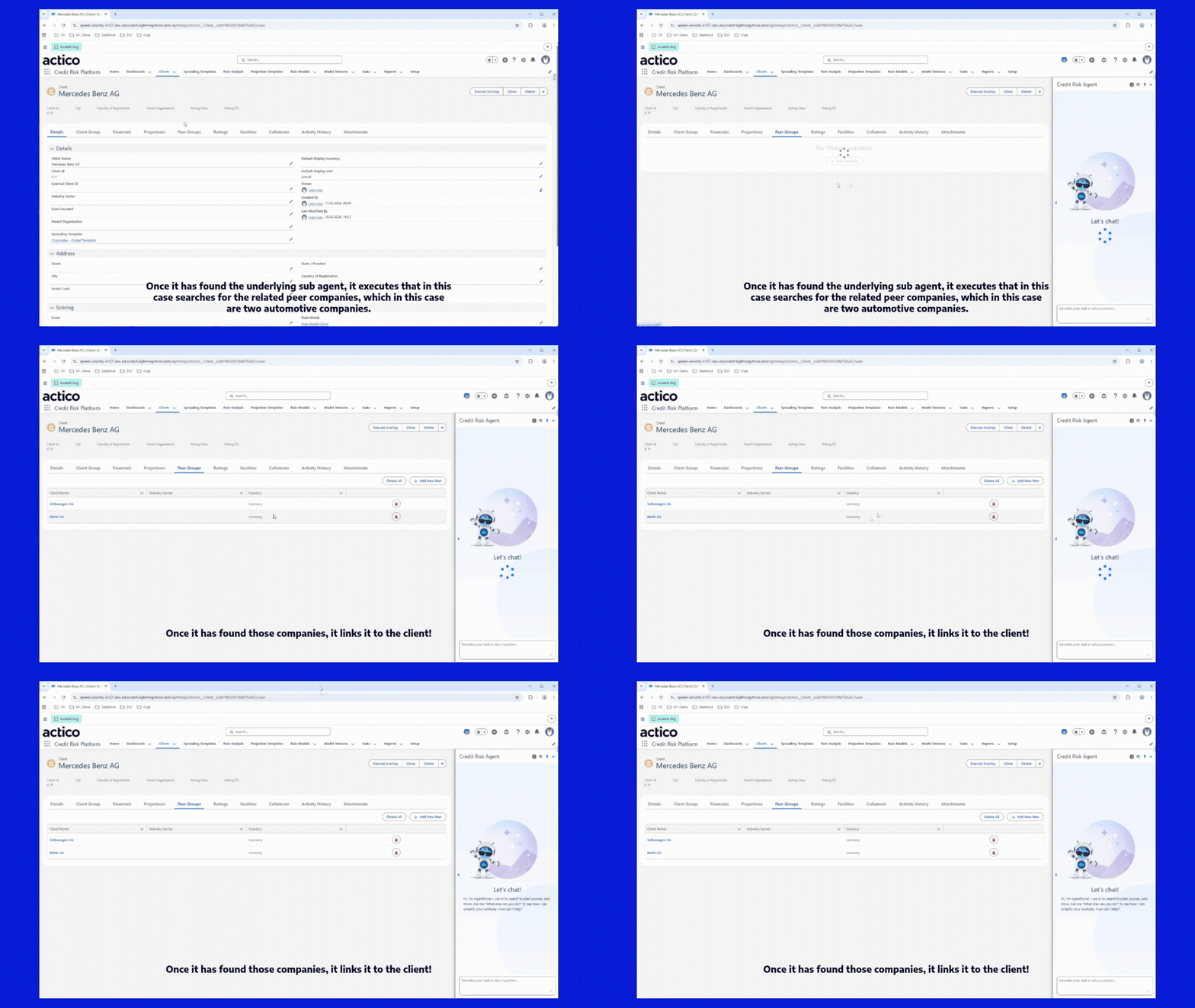
Compare companies against relevant peers and market benchmarks to put financial performance into context.
Successful agent-based systems follow a clear architecture and governance model. Financial institutions operate in highly regulated environments, requiring Agentic AI deployment with robust controls embedded from inception.
Key Components:
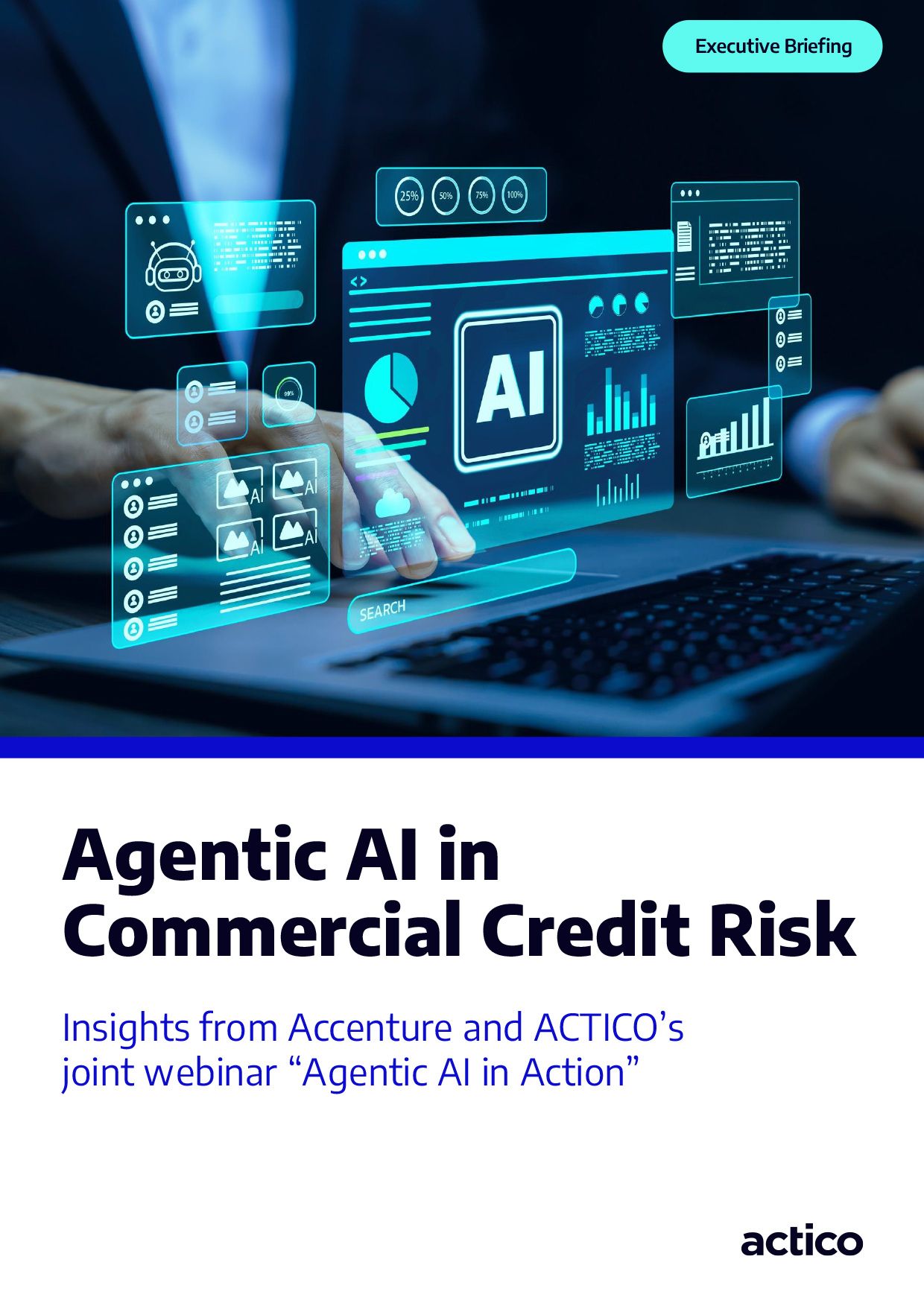
Get insights on how banks and financial institutions are using Agentic AI to transform credit risk assessment – in the Executive Briefing “Agentic AI in Commercial Credit Risk.”
What is Agentic AI?
Agentic AI systems autonomously plan and execute complex, multi-step tasks to achieve defined goals. Unlike traditional automation or Generative AI, agents reason, adapt to new information, and coordinate across systems — all within clearly defined boundaries.
How does Agentic AI differ from Generative AI?
Generative AI answers questions and creates content when prompted — one interaction at a time. Agentic AI advances further: it decomposes a goal into subtasks, executes them sequentially, responds to interim results, and delivers structured output for human review.
Will AI agents replace credit analysts?
No. Agentic AI addresses time-intensive operational work — data gathering, financial extraction, analysis preparation — enabling analysts to emphasize expert judgment and final decisions. Human oversight remains central throughout.
What specific tasks can a credit agent perform?
A credit agent can validate incoming credit requests, extract and structure financial statement data, perform ratio analysis and peer comparisons, prepare qualitative and quantitative risk assessments, generate credit memos, and flag early warning signals — all within existing credit risk platforms.
How is ROI calculated for Agentic AI in credit risk?
ROI derives from two factors: value created and costs incurred. Benefits emphasize reduction in processing time per workflow and analyst capacity freed. Costs include implementation, prompt engineering and maintenance, and consumption-based usage fees. Institutions can target 50–60% reduction in time-to-decision, with ROI reaching approximately 3x when scaled beyond initial pilots.
Can Agentic AI be deployed in compliance with financial regulations?
Yes. Responsible deployment requires full traceability of all agent actions and outputs, strict data access controls aligned to need-to-know principles, human-in-the-loop checkpoints for all credit decisions, and compliance with frameworks such as the EU AI Act and DORA.
Can the agent capabilities be accessed from other systems?
Yes. ACTICO exposes agent capabilities via MCP (Model Context Protocol) servers, allowing third-party systems to call functions such as financial spreading or risk rating preparation through an API.
How long does implementation take?
Timeline varies depending on scope and existing infrastructure, but a focused pilot — targeting one or two workflows such as financial spreading or risk rating — can typically launch within weeks. Scaling to additional workflows follows once the pilot is validated.
How do I get started implementing Agentic AI in our Credit Risk Assessment processes?
The best first step involves mapping current credit workflows and identifying where the most manual, repetitive work occurs. ACTICO can then help scope a proof of concept, model ROI for specific volumes, and demonstrate capabilities against your own data.
You may also be interested in:
Podcast
“Sovereignty Means Being Able to Change Course” – A Conversation with Manfred Beckers
Digital sovereignty in finance: Manfred Beckers discusses cloud dependencies, DORA, exit strategies and maintaining the ability to adapt.
Compliance

News
Chartis Research Again Names ACTICO a Category Leader for AML Transaction Monitoring 2026
ACTICO has again been named a Category Leader in the Chartis RiskTech Quadrant® for AML Transaction Monitoring Solutions 2026. The assessment recognizes ACTICO’s strengths in risk typology modeling, analytical modeling, model validation, workflow automation, and AI-powered compliance.
Anti-Money Laundering
Financial Institutions/FinTech, Insurance
Awards & Recognitions
News
ACTICO announces it has joined forces with Axe Finance, a global provider of credit and risk management software
ACTICO announces that it has joined forces with Axe Finance, a UK-based provider of credit and risk management software. The deal is supported by Keensight Capital, one of the leading private equity managers dedicated to pan-European Growth Buyout investments.

Webinar On-Demand
Update on AML Requirements for Insurers: what you need to do now to be ready by July 2027.
AML update for insurers: What needs to be done by July 2027 regarding KYC, risk assessment and transaction monitoring? Including practical insights. Watch the webinar.
Anti-Money Laundering
Insurance
Agentic AI enables financial institutions to modernize credit risk processes while maintaining transparency and regulatory control. Discover how AI agents can support your credit analysts and accelerate risk decisions.
Newsletter
Regular News and Updates
Compliance
Asset Administration
Credit Risk
Decision Management
Resources
You are currently viewing a placeholder content from Hubspot Embedded Content. To access the actual content, click the button below. Please note that doing so will share data with third-party providers.
More InformationYou are currently viewing a placeholder content from HubSpot. To access the actual content, click the button below. Please note that doing so will share data with third-party providers.
More InformationYou are currently viewing a placeholder content from Hubspot Meetings. To access the actual content, click the button below. Please note that doing so will share data with third-party providers.
More InformationYou are currently viewing a placeholder content from Wistia. To access the actual content, click the button below. Please note that doing so will share data with third-party providers.
More Information